
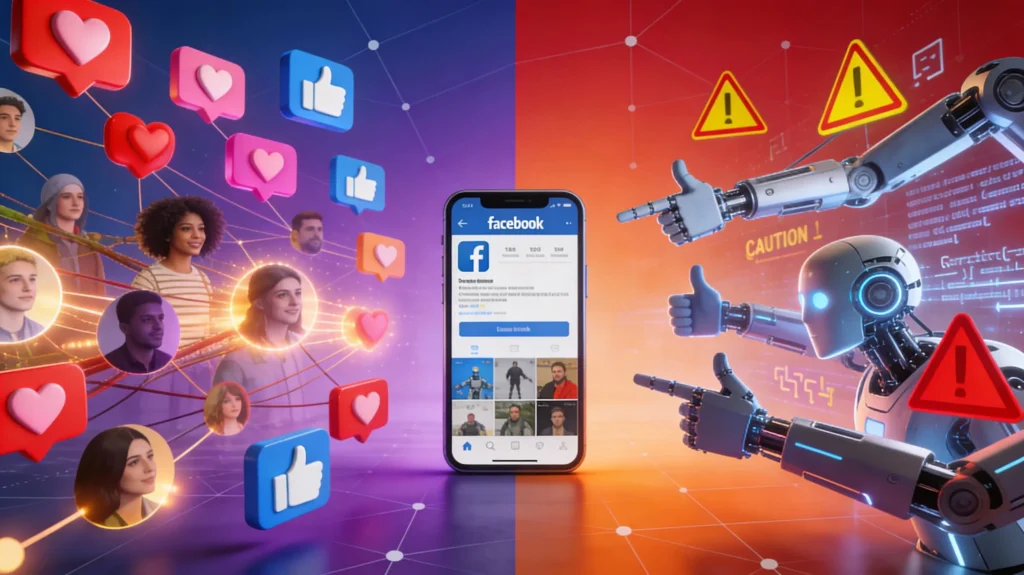
In today’s hyper-competitive digital landscape, social media engagement has become the currency of online success. With Facebook’s average engagement rate hovering around 1.3% to 5.07% across industries, businesses and content creators face mounting pressure to stand out in crowded newsfeeds. This challenge has given rise to Facebook auto likes services—automated tools promising to boost visibility, trigger algorithmic favorability, and create the illusion of popularity. These services, along with Facebook auto reaction systems and safe follower generators, have carved out a controversial niche in the social media marketing ecosystem. This article examines how these automation tools work, their potential advantages, the significant risks they pose, and whether any service can truly deliver “safe” artificial engagement while navigating Facebook’s increasingly sophisticated detection systems.
Understanding Facebook Auto Likes Technology
Facebook auto liker services are third-party tools designed to automatically generate likes, reactions, and engagement on posts without manual user interaction. These systems typically operate through one of several technical approaches: bot networks that simulate human accounts, API exploitations that bypass Facebook’s official access channels, or engagement exchange platforms where users reciprocally like each other’s content. The technology behind Facebook auto likes has evolved from crude bot scripts to sophisticated systems that attempt to mimic human behavior patterns, including varied timing, IP rotation, and gradual delivery schedules.
The mechanics of Facebook auto reaction tools involve creating or controlling multiple accounts that systematically interact with target content. Some services claim to use “real” accounts operated by actual users in engagement pods or exchange networks, while others rely purely on automated bots. Advanced systems employ machine learning to analyze posting patterns and deliver engagement at times that appear organic, avoiding the telltale signs of automation such as simultaneous likes from multiple accounts or perfectly timed reactions. Safe follower generators market themselves as superior alternatives by promising gradual follower acquisition that supposedly mimics natural growth curves.
These tools typically integrate with Facebook through unofficial methods that violate the platform’s Terms of Service, which explicitly state in Section 3.2 that users cannot “use automated software to log into accounts” or employ “automated means to access the service without API approval”. Unlike legitimate automation tools such as Meta Business Suite—which Facebook officially sanctions for scheduling posts and managing pages—Facebook auto liker services operate in a gray or explicitly prohibited zone. The distinction lies in their purpose: approved tools facilitate content management, while auto-like services artificially inflate engagement metrics that Facebook’s algorithm uses to determine content quality and reach.
Benefits and Use Cases
Proponents of Facebook auto likes point to several potential advantages that drive their popularity among certain user segments. The most immediate benefit is the time-saving aspect—automated engagement allows businesses and creators to maintain a consistent presence without dedicating hours to manual interaction. For new pages launching in competitive niches, initial engagement can be crucial for gaining visibility, as Facebook’s algorithm tends to suppress content from pages with low interaction rates. A Facebook auto reaction boost might theoretically help overcome this “cold start” problem by creating an appearance of popularity.
The psychology of social proof plays a central role in the appeal of these services. Research indicates that 95% of people are imitators rather than initiators, naturally looking to others’ behavior when making decisions. When users encounter a post with substantial likes and reactions, they perceive it as valuable or trustworthy, potentially triggering genuine organic engagement from real users who might otherwise scroll past. This phenomenon, where artificial engagement seeds authentic interaction, represents the core value proposition of safe follower generator services. Businesses might consider these tools when launching time-sensitive campaigns, maintaining engagement during off-hours when their target audience is less active, or building initial credibility for brand-new pages that lack an established following.
Additionally, consistent engagement metrics can create a perception of brand stability and popularity that influences potential customers during the consideration phase. For small businesses competing against established brands with thousands of genuine followers, Facebook auto liker tools might seem like an equalizer that levels the playing field. Some marketers argue that in industries where social proof heavily influences purchasing decisions, these services provide a shortcut to establishing market presence while organic strategies develop in parallel.
Risks and Drawbacks
The risks associated with Facebook auto likes services substantially outweigh their potential benefits, starting with direct violations of Facebook’s Terms of Service. The platform’s policies explicitly prohibit “artificially inflating interactions” under Section 3.3, with enforcement actions that included 15 million account bans and 2.8 billion content actions in Q4 2024 alone. Facebook employs sophisticated detection systems combining artificial intelligence, behavioral analysis, image recognition, spam keyword filters, and continuously updated machine learning models specifically designed to identify inauthentic activity. Accounts caught using Facebook auto reaction tools face consequences ranging from reduced organic reach to complete account suspension, with Meta’s 2024 transparency reports showing a 40% spike in automation-related violations.
Beyond platform penalties, fake engagement creates fundamental business problems that undermine long-term success. Automated likes generate no genuine customer relationships, produce zero conversions, and distort analytics that businesses rely on for strategic decisions. When a page accumulates thousands of fake followers through a safe follower generator, future posts reach an audience of bots and disengaged accounts rather than potential customers, actually decreasing the percentage of real users who see content. Facebook’s algorithm detects this disconnect between engagement and meaningful interactions (such as shares, comments with substance, and click-throughs), further suppressing organic reach as a quality control measure.
The reputational damage from being exposed as using Facebook auto liker services can be devastating, particularly for businesses positioning themselves as authentic or community-focused brands. Savvy consumers and competitors can often identify fake engagement through patterns such as likes from accounts with generic names, engagement from geographically irrelevant regions, or suspicious spikes in metrics without corresponding increases in comments or meaningful interaction. Meta has also pursued legal action against fake engagement sellers, as seen in their 2020 lawsuit against Nakrutka and other companies offering bot-driven likes, establishing legal precedent that extends penalties beyond platform bans to potential litigation.
What Makes a Service “Safe”?
Services marketing themselves as safe follower generators or secure Facebook auto likes providers typically claim to employ risk-mitigation strategies such as gradual delivery schedules, geographic targeting to match audience demographics, engagement from “real” accounts rather than obvious bots, and IP rotation to avoid detection patterns. Some platforms position themselves as engagement exchange networks where genuine users reciprocally interact, though these still violate Facebook’s terms against artificial engagement coordination. The concept of “safety” in this context refers to reduced detection probability rather than actual compliance with platform policies.
However, the fundamental truth is that no automation service focused on generating inauthentic engagement can guarantee complete safety from Facebook’s evolving detection capabilities. The platform’s bot detection systems analyze thousands of data points including mouse movements, keystroke patterns, scrolling behavior, device fingerprints, and contextual information that distinguish human users from automated scripts. Even sophisticated Facebook auto reaction tools that incorporate randomization and human-like behavior eventually establish detectable patterns as Facebook’s machine learning models adapt to new evasion techniques.
Red flags that indicate particularly risky services include unrealistic promises such as “thousands of followers overnight,” lack of transparency about methodology, suspiciously low pricing that suggests bot networks rather than real users, no clear refund or guarantee policies, and requests for Facebook login credentials (which violates security best practices and often leads to account compromise). Services requiring full account access pose additional risks beyond detection, including data theft, unauthorized posting, and potential use of your account to deliver engagement to other customers. The constant evolution of Facebook’s policies and detection technology means that even services currently avoiding detection may suddenly trigger enforcement actions as algorithms update.
Alternatives and Best Practices
Legitimate alternatives to Facebook auto liker services not only comply with platform guidelines but also deliver sustainable long-term results that artificial engagement cannot replicate. Organic growth strategies focus on creating genuinely valuable content that resonates with target audiences, optimized for Facebook’s 2025 algorithm priorities which favor authentic interaction, evergreen content, and community-building initiatives. Content formats performing exceptionally well include video content (particularly short-form and live streams), posts that generate meaningful conversations in comments, and content that encourages sharing rather than passive consumption.
Facebook Groups represent a powerful organic growth engine, providing spaces for deeper community engagement and relationship building that algorithmic changes cannot diminish. Creating a branded community group allows businesses to foster genuine connections, gather customer feedback, and maintain visibility independent of newsfeed algorithm fluctuations. Complementing organic strategies, Facebook Ads provide a legitimate paid approach to reach expansion, offering precise targeting capabilities that deliver impressions to genuinely interested users rather than fake accounts generated by safe follower generator services.
Additional best practices include consistent posting schedules that train the algorithm to recognize your page as active and reliable, organic post targeting to ensure content reaches relevant demographics within your follower base, strategic collaboration with complementary brands or influencers for cross-promotion, and authentic engagement reciprocity where you meaningfully interact with your audience’s comments and content. Building sustainable Facebook presence requires patience, but pages that prioritize authentic community development consistently outperform those relying on artificial metrics, achieving higher conversion rates, better customer lifetime value, and immunity from the detection risks that plague Facebook auto likes users.
Conclusion
Facebook auto reaction and Facebook auto liker services present a tempting shortcut in the challenging landscape of social media marketing, promising quick visibility boosts and the psychological benefits of social proof. However, the substantial risks—including platform penalties, damaged brand reputation, distorted analytics, and zero genuine business value—fundamentally outweigh the temporary metric inflation these tools provide. While some services market themselves as safe follower generators with reduced detection risk, no automated engagement system can guarantee protection from Facebook’s continuously evolving detection algorithms that identified and banned 15 million accounts for policy violations in late 2024 alone.
The trade-off between quick artificial results and long-term sustainable growth ultimately favors authentic strategies. Businesses must carefully evaluate whether the temporary appearance of popularity justifies the existential risk to their Facebook presence and brand credibility. For those seeking legitimate expansion, organic growth techniques, Facebook Groups, strategic content optimization, and properly deployed Facebook Ads deliver measurable business outcomes without policy violation risks. As social media platforms increasingly prioritize authentic community connections and deploy sophisticated bot detection technology, the future of successful Facebook marketing lies not in gaming algorithmic systems but in genuinely serving audience needs and fostering real relationships that transcend superficial engagement metrics.