
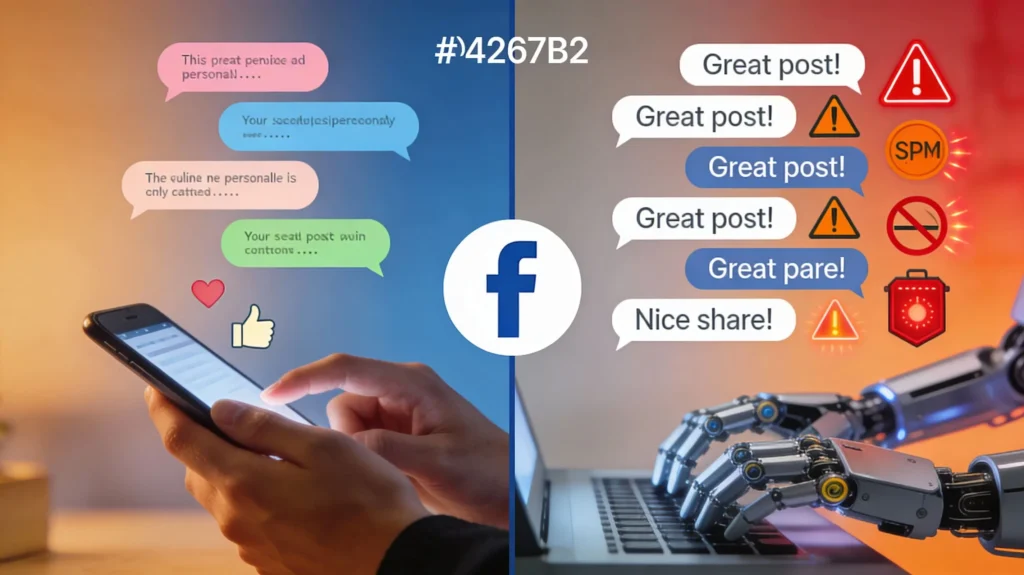
Meaningful comment engagement has become the cornerstone of social media success. Facebook’s algorithm now prioritizes posts that spark genuine conversations and generate meaningful interactions. Brands face constant pressure to maintain active participation across their pages, groups, and ads.
This challenge has led to the emergence of Facebook auto comment tools. These automated solutions help users maintain consistent commenting activity without manual intervention. Unlike passive engagement tools such as auto-likes, auto comment systems actively participate in conversations. This makes them particularly powerful yet potentially problematic.
These tools range from simple template-based responders to sophisticated AI-powered systems. The advanced versions claim to understand context and generate personalized replies. This article examines Facebook auto comment tool technology comprehensively. We’ll explore how these systems work, their potential benefits, the substantial risks they pose, and whether any automated approach can balance efficiency with authenticity.
Understanding Facebook Auto Comment Technology
How Auto Comment Tools Work
Facebook auto comment tool services post comments automatically without manual input. They’re typically triggered by specific conditions such as keywords, post types, or time-based schedules. The most common mechanism is keyword-trigger systems. These monitor content for specified phrases like “price,” “delivery,” or “how much.” When detected, they automatically post pre-written responses.
More advanced platforms incorporate AI-powered sentiment analysis. These can identify positive, negative, or neutral tones in posts and comments. This allows them to deploy contextually appropriate responses. They can also flag problematic content for human review.
Evolution from Spam to Sophistication
The technology has progressed significantly from crude spam-like systems. Early tools posted identical messages across multiple posts. Modern Facebook auto comment platforms are more sophisticated. They create pools of varied response templates and randomly select from them. This avoids repetitive patterns that trigger Facebook’s spam detection algorithms.
These systems often include delay randomization features. They introduce variable wait times between actions, mimicking human behavior patterns. This reduces the digital fingerprint that identifies bot activity. Some tools operate through legitimate social media management platforms with API access. Others use browser automation or cloud-based virtual devices that emulate real Android environments.
Integration and Compliance
Integration methods vary significantly in their compliance with Facebook’s policies. Legitimate automation tools like Meta Business Suite focus on moderation. They automatically hide spam comments, respond to FAQs, or route messages to team members. These sanctioned tools work within Facebook’s Terms of Service.
Conversely, third-party auto comment services that post promotional content operate differently. Those that generate artificial conversation volume or engage with others’ posts to boost visibility violate Facebook’s Community Standards. They risk account penalties and suspension.
Benefits and Use Cases
Time-Saving for High-Volume Interactions
The primary appeal of Facebook auto comment solutions lies in their time-saving potential. This is particularly valuable for businesses managing high volumes of customer interactions. Brands receiving hundreds of comments daily on product posts or advertisements benefit most. Keyword-triggered auto-responses can provide instant acknowledgment to common inquiries about pricing, availability, or shipping.
These tools maintain presence during non-business hours. They work across different time zones when manual monitoring proves impractical. This scalability benefit becomes particularly valuable for growing businesses. They experience surging engagement but lack proportional resources to hire dedicated community management teams.
Algorithmic Visibility Benefits
Consistent commenting activity can theoretically increase visibility through Facebook’s 2025 ranking signals. The platform’s algorithm prioritizes content that generates back-and-forth conversations. It treats active discussion as a quality signal that warrants broader distribution. Auto comment tools that successfully initiate or maintain conversations could potentially trigger this algorithmic boost.
For time-sensitive scenarios, automated systems ensure immediate engagement. This includes flash sales, product launches, or trending topic participation. Human teams may be unavailable during these critical moments.
Practical Business Scenarios
Consider a hypothetical e-commerce brand running Facebook ads during peak shopping seasons. An auto comment tool configured with templates addressing common questions could maintain customer service responsiveness. This works during overnight hours when no staff members are available. Similarly, content creators participating in multiple Facebook groups might use automation to maintain presence across communities.
These use cases represent scenarios where Facebook auto comment technology addresses genuine operational challenges. However, as subsequent sections will explore, the risks often outweigh these apparent conveniences.
Risks and Drawbacks
Policy Violations and Account Penalties
The risks associated with Facebook auto comment tools substantially outweigh their operational benefits. They begin with direct violations of Facebook’s Terms of Service regarding automated activity. While the platform permits certain automation for legitimate customer service purposes, it explicitly prohibits systems designed to artificially inflate engagement.
Facebook employs sophisticated spam detection mechanisms. These analyze commenting patterns, including posting frequency, content repetition, response timing, and behavioral consistency. Accounts flagged for automated commenting face serious consequences. These range from comment removal and temporary restrictions to complete page or account suspension. Users report detection warnings even when implementing randomized wait times.
Quality and Reputation Concerns
Generic or template-based responses frequently appear impersonal and robotic. They seem disconnected from the actual conversation context. This immediately signals to savvy audiences that they’re interacting with automation rather than genuine human engagement. This perception damages the authentic relationship-building that social media success fundamentally requires.
The challenge of contextual awareness remains a critical limitation. Even AI-powered systems struggle to understand nuanced conversations. They fail to detect sarcasm or humor. They don’t recognize when serious situations require empathetic human responses. They can’t avoid posting inappropriate comments on sensitive topics.
Real-World Failure Scenarios
Consider a scenario where an auto comment tool posts a cheerful promotional message on a customer complaint about defective merchandise. Or where keyword triggers cause an automated reply on a post discussing unrelated news events that happen to contain monitored phrases. These tone-deaf responses create PR disasters. They spread rapidly through screenshots and shares, causing reputational damage far exceeding any efficiency gains.
Additionally, excessive automated commenting can trigger Facebook’s spam filters. These throttle page reach, reducing organic visibility. This ultimately achieves the opposite of the intended visibility boost. With Facebook’s engagement rates averaging just 0.16-0.20% in early 2025, meaningful interactions are more valuable than volume.
What Makes an Auto Comment Tool Effective?
Key Features of Quality Systems
Several features distinguish more sophisticated systems from basic spam generators. However, even the best automation cannot replicate genuine human engagement. Higher-quality tools prioritize contextual awareness capabilities. They use AI sentiment analysis to assess whether comments express positive, negative, or neutral tones before deploying responses.
Advanced platforms offer extensive customization options. These include multiple response template pools and conditional logic. The logic applies different rules based on post type or commenter characteristics. Variable randomization cycles through templates and introduces natural-seeming delays between actions.
Safety Features and Safeguards
Effective Facebook auto comment tools incorporate important safeguards. These include daily action limits that prevent overwhelming activity volumes. They feature moderation queues that flag uncertain scenarios for human review before posting. Targeting parameters restrict automation to specific posts or campaigns rather than blanket application across all content.
The ability to combine multiple triggers provides nuanced control. For example, only responding when comments contain both specific keywords AND links reduces inappropriate activation. Legitimate platforms integrated with Meta Business Suite focus primarily on defensive automation. This includes hiding spam and routing customer service inquiries.
Red Flags and Limitations
Problematic auto comment services show several warning signs. These include promises of unlimited commenting across others’ posts for visibility. One-size-fits-all templates with no customization options are another red flag. Lack of transparency about detection risks or Facebook policy compliance should raise concerns.
Even sophisticated systems face fundamental limitations. No automation can match human judgment in recognizing when to show empathy. They can’t determine when to escalate issues to management or when humor is appropriate. The most critical consideration remains that even the “safest” auto comment approach carries inherent risks. Facebook’s detection algorithms continuously evolve to identify patterns distinguishing automation from authentic human interaction.
Alternatives and Best Practices
Semi-Automated Approaches
Rather than risking account penalties and reputation damage through full automation, businesses should explore semi-automated approaches. Comment monitoring tools and social media management dashboards consolidate notifications from multiple pages and groups. These allow teams to respond efficiently without automation.
These platforms often include saved reply templates. Human moderators can select and customize these for individual situations. This combines efficiency with the contextual judgment that prevents tone-deaf responses. The human element remains crucial for maintaining authentic engagement.
Efficient Manual Engagement Strategies
Scheduled engagement time blocks represent another effective alternative. Dedicate specific periods daily for focused comment interaction rather than attempting constant real-time monitoring. This approach ensures consistent presence without the always-on pressure that drives automation adoption.
For businesses with team resources, implement response protocols. Assign different moderators to handle various comment types. Customer service inquiries go to support staff. Technical questions go to product experts. General engagement goes to the marketing team. This distributes workload while maintaining authentic expertise in responses.
Strategic Notification Management
Configure strategic notifications that prioritize high-value interactions. Focus on comments from frequent customers, influencers, or posts with multiple replies. This helps focus limited resources where genuine engagement delivers maximum relationship-building value.
Organizations should also leverage Facebook’s legitimate automation features within Meta Business Suite. Use them for defensive purposes: automatically hiding comments containing profanity or spam keywords. Flag potentially problematic content for human review. Use chatbots for initial customer service triage in Messenger before routing complex issues to human agents.
Content-First Strategy
Perhaps most importantly, invest resources in creating genuinely engaging content. Content that naturally sparks conversation reduces the perceived need for artificial comment generation. Ask questions, share customer stories, address controversial industry topics, and host live sessions. This organically attracts authentic interactions.
The fundamental principle remains that meaningful conversation quality consistently outperforms comment volume. This applies to both building communities and satisfying Facebook’s algorithm.
Conclusion
Facebook auto comment tool usage presents a complex trade-off between operational efficiency and authenticity. These systems offer appealing time-saving benefits and scalability for businesses managing high interaction volumes. However, the substantial risks typically outweigh the operational conveniences.
The risks include Terms of Service violations and account suspension. Reputational damage from tone-deaf automated responses is common. There’s a fundamental disconnect between artificial comments and genuine relationship-building. Even sophisticated auto comment platforms with AI-powered contextual awareness cannot replicate nuanced human judgment.
The critical question facing marketers isn’t whether Facebook auto comment technology can save time—it demonstrably can. The question is whether efficiency gains justify sacrificing the genuine connections that ultimately drive business results. Facebook’s 2025 algorithm explicitly prioritizes meaningful interactions that bring people together in authentic discussions. Average engagement rates remain at modest 0.19% levels. The quality of individual interactions matters far more than achieving high comment volumes through automation.
Businesses must carefully consider whether their brand values align with automated commenting. Audiences increasingly detect and reject inauthentic engagement tactics. The future of successful Facebook marketing lies not in finding more sophisticated ways to automate human connection. It lies in strategically allocating resources to facilitate genuine conversations at sustainable scales.
By combining legitimate automation tools for defensive moderation with efficient manual engagement practices, brands can achieve balance. Add semi-automated templates requiring human oversight and content strategies that organically inspire discussion. This creates the balance between operational realism and authentic community building. This approach creates lasting customer relationships and sustainable social media growth.